
The policyholder must pay a specific amount periodically for the agreement to stand. Hidden charges are examples of variable costs because they fluctuate and are influenced by various external and internal factors. This article will discuss the differences between variable and fixed costs and how they influence business activities.
- Variable costs are costs that change with the level of business activity.
- A higher operating leverage indicates a higher proportion of fixed costs, which can be beneficial if the company increases its sales.
- Our team is ready to learn about your business and guide you to the right solution.
- It can also help you identify areas where you’re overspending and could benefit from cutting back.
- Variable costs, on the other hand, change directly with the level of production or sales.
- Fixed costs are also considered to be time-related, meaning they are incurred over a specific period, regardless of the level of activity.
Interest Expense
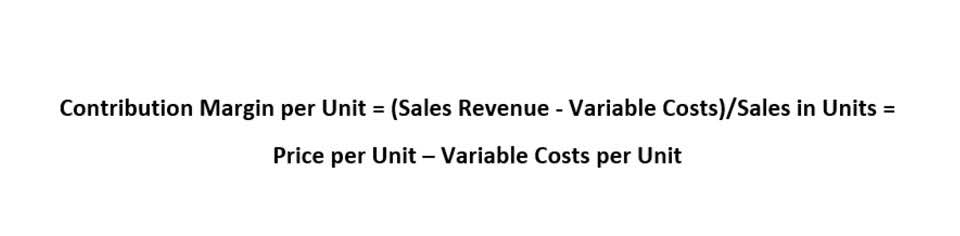
You can calculate the variable cost for a product by dividing the total variable expenses by the number of units for sale. To determine the fixed cost per unit, divide the total fixed cost by the number of https://www.bookstime.com/ units for sale. These businesses can easily cover their small amounts of fixed costs, and so can stay in business at relatively low sales levels. An understanding of the fixed and variable expenses can be used to identify economies of scale. Taken together, fixed and variable costs are the total cost of keeping your business running and making sales.

Examples of variable costs:
- If each box costs $0.50 and the bakery ships 1,000 cupcakes, packaging costs a total of $500.
- Understanding cost behavior is essential to effective decision-making, as it helps businesses anticipate how costs will affect profitability.
- During production, you must pay to use electricity, water, gas, and production venues.
- Cost behavior refers to the manner in which a company’s costs change as its production levels fluctuate.
- These costs do not fluctuate with business activity, providing stability but also requiring careful management to avoid financial strain during low-revenue periods.
- One critical component of this understanding is differentiating between variable costs and fixed costs.
This strategic approach ensures that operations are aligned with financial goals, maintaining a balance between cost control and productivity. This kind of expense is known as a mixed, semi-variable, or semi-fixed cost. Profit margin is your business revenue after fixed costs vs variable costs subtracting your expenses.
Financial Analysis and Performance
Fixed costs and variable costs differ in several aspects, including their behavior, relationship to production or sales volume, and controllability. Fixed costs remain constant regardless of the level of activity, while variable costs fluctuate in proportion to changes in output or sales revenue. Fixed costs are time-related and often referred to as “overhead costs,” while variable costs are calculated on a per-unit basis and are directly influenced by management decisions. Understanding the distinction between fixed costs and variable costs is crucial for both businesses and individuals who aim to manage financial resources effectively. These two categories of costs play a significant role in business decision-making, influencing pricing strategies, production levels, and overall profitability.

Raw materials, for example, are a kind of variable cost that companies who produce a physical product will be familiar with. Rent, for example, is an indirect fixed cost; it does not factor directly into production. Wages, however, are a direct fixed cost, as the expense goes directly into producing the goods or services your company sells. The majority of fixed costs are indirect (they don’t specifically relate to the production of goods or services), though some can be direct. A company looking to reduce fixed costs will likely need time, as these costs are usually set in a contract.
- She holds a Bachelor of Science in Finance degree from Bridgewater State University and helps develop content strategies.
- In conclusion, fixed costs and variable costs are two fundamental categories of costs that every business owner or manager should understand.
- You may have to pay more utility bills if production increases due to higher demands for your goods.
- The total cost curve starts from the level of fixed cost and rises with the variable cost as output increases.
- Every month, you pay for a large warehouse, expensive machines, and a full-time staff.
- With examples and tips, you’ll see how understanding your costs can improve your pricing, budgeting, and profits.
- In summary, accounting for fixed and variable costs involves the appropriate use of cost allocation methods and proper reporting in financial statements.
- When a manufacturer line ramps up production, it consumes more energy.
- Marginal cost refers to the additional expense incurred for producing one more unit of output.
- Fixed salaries are paid consistently to full-time employees, regardless of business activity.
Variable costs are a direct input Debt to Asset Ratio in the calculation of contribution margin, the amount of proceeds a company collects after using sale proceeds to cover variable costs. The total expenses incurred by any business consist of variable and fixed costs. Being able to accurately calculate and predict your company’s fixed and variable expenses allows you to ensure the pricing point you’ve chosen is reasonable, profitable, and achievable.
Trackback URL: https://www.flashbackstories.com/fixed-and-variable-costs-definition-and-examples/trackback/